Emergency Boiler Replacement: How Fast Can a Dead Boiler Be Replaced?
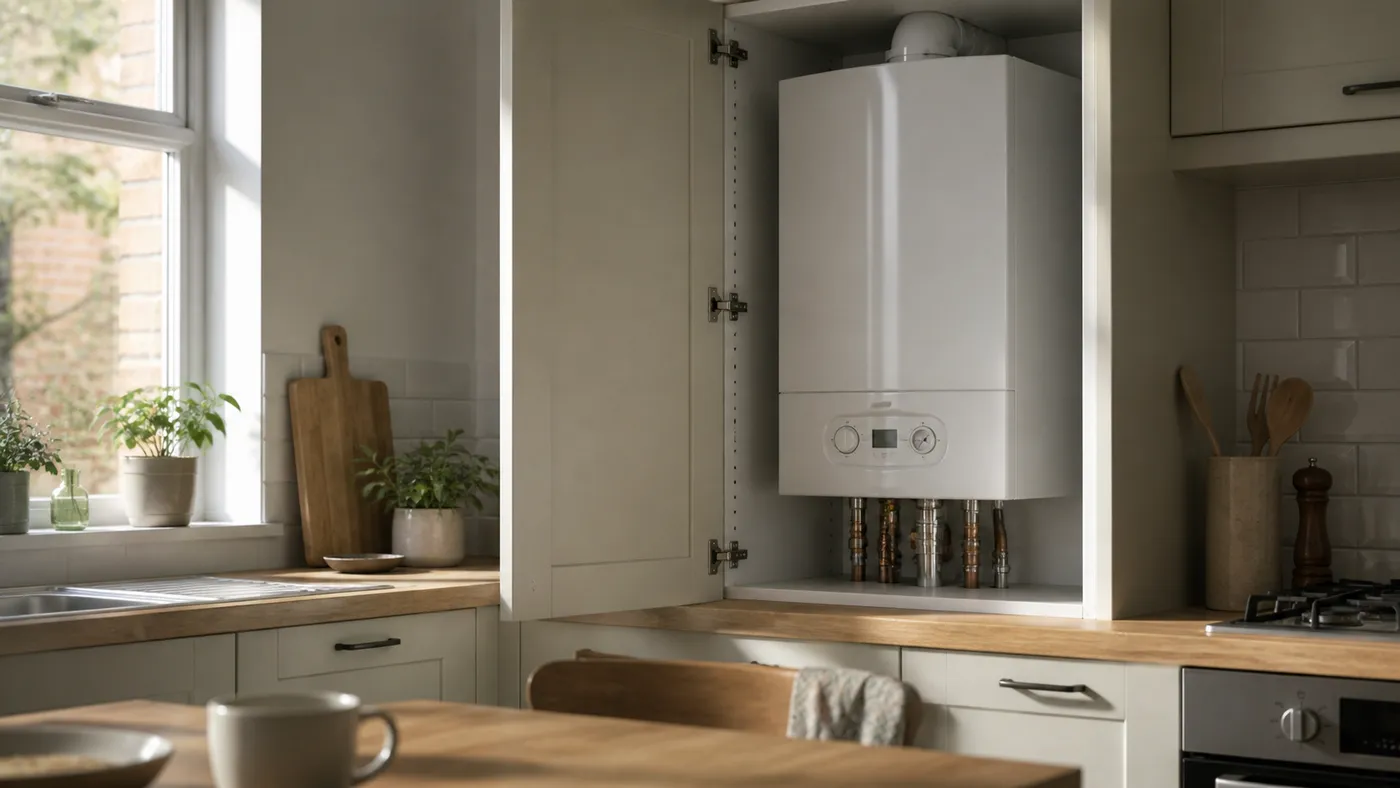
Fitting a new boiler usually takes one to two days. In an emergency, the wait comes from confirming the old boiler is finished, the survey and the quote, and whether the new one can go in the same place.
An emergency boiler replacement is usually one to two days of fitting once a new boiler is on site. What decides how fast you get warm again is everything before that: confirming the old boiler really is finished, a survey, a written quote, and whether the new boiler can go in the same place with the same flue. A like-for-like swap can move quickly. A conversion, a relocation or a flue that no longer meets the rules takes longer, and no honest installer can give you a firm time before someone has seen the job.
How quickly can a boiler be replaced in an emergency?
The installation itself is normally a one or two day job. The real variable is how long it takes to get from a dead boiler to an agreed quote with the right boiler available.
The steps are the same as any replacement, just compressed. An engineer confirms the old boiler cannot be safely or sensibly repaired. Someone surveys the property: heat demand, hot water needs, gas supply, flue route, condensate and controls. You get a written quote. The boiler is ordered or taken from stock, and the fitting day is booked. Each step can be shortened when you are without heat, but none of them should be skipped. A boiler chosen in a hurry and sized by guesswork is one you will live with for years. For a sense of how the fitting days themselves run, see our guide to how long a new boiler installation takes.
Is it really a replacement, or could a repair be faster?
Sometimes a repair is the quicker way back to heat, even on an old boiler. Replacement becomes the emergency answer when the boiler is unsafe, the part is no longer made, or the repair would cost a large share of a new boiler.
If you smell gas, leave the boiler alone, open windows, do not use electrical switches, and call the National Gas Emergency Service on 0800 111 999. Once a Gas Safe registered engineer has looked at a faulty boiler, they may label it "At Risk" or "Immediately Dangerous" under the gas industry's unsafe situations procedure. An Immediately Dangerous boiler will be disconnected with your permission and must not be used until it is put right or replaced. That is often the moment a planned replacement becomes an urgent one.
If the boiler is simply not working, a diagnosis tells you what you are choosing between. A common part on a boiler a few years old may be fitted quickly. A failed heat exchanger on a boiler past its fifteenth winter, or a part that is discontinued, usually points to replacement. Our guide to the signs you need a new boiler covers where that line usually falls.
What makes a fast replacement possible, and what slows it down
A like-for-like swap, same boiler type in the same position using a compliant flue route, is the quickest kind of replacement. Changing the type or the location adds work, and sometimes permissions.
These things tend to keep an urgent job simple:
- Same type of boiler. Combi to combi, or system to system with the existing cylinder kept, avoids new pipework and removing tanks.
- Same position. Gas, water, heating and condensate connections are already there.
- A flue position that still meets the new boiler's clearances. If the old terminal works for the new boiler, the flue goes back through the same hole.
- A gas supply pipe that is big enough for the new boiler's output, checked on the survey rather than discovered on the day.
These things tend to add time:
- Converting to a combi from a system with tanks in the loft, which means removing the cylinder and tanks and altering pipework.
- Moving the boiler to a new room, or away from a back boiler or open flue.
- Flats where the freeholder must approve a new flue terminal, or where access and parking make the fitting day longer.
- Upsizing the gas pipe from the meter, which can be a separate piece of work.
If you need heat back quickly, it can make sense to fit a like-for-like replacement now and leave bigger changes for later. The combi boiler replacement page explains what a straightforward combi swap covers.
How to stay warm while you wait
Use electric heat and hot water where you have it, and never use gas or fuel-burning appliances that were not designed to heat a room.
- Plug-in electric heaters, such as oil-filled radiators or convector heaters, can keep one or two rooms warm. Plug them straight into a wall socket rather than an extension lead.
- An immersion heater, if you have a hot water cylinder, can heat water without the boiler. It is electric, so running it for long periods will show on your bill.
- Electric showers run independently of the boiler, so a house with one still has hot showers.
- Do not use a gas cooker, camping stove or barbecue for heat. These can produce carbon monoxide in an enclosed room. Make sure you have a working carbon monoxide alarm.
If someone in the household is elderly, disabled, very young or unwell, tell the installer when you call. It is also worth checking that you are on your energy supplier's Priority Services Register, which exists for households that need extra help when supply or heating problems happen. Tenants should report a dead boiler to their landlord straight away, because keeping the heating and hot water working is the landlord's responsibility.
What an urgent quote should still include
A fast quote should still be a proper quote: a named boiler at a stated output, the flue route, the gas pipe check, the condensate route, the controls, and what happens to the old boiler.
Photos and a video call can speed up the first conversation, but a price for the full job depends on things that are easy to miss remotely, such as the size of the gas pipe or whether the flue clearances still work. Be wary of a figure given over the phone for a boiler nobody has seen, and of a quote that leaves out the flue, the system clean or the controls, because those gaps tend to come back as extras. Our checklist for comparing boiler quotes works just as well under time pressure.
Paying for a replacement you did not plan for
An unplanned boiler is a large bill at short notice. Spreading the cost is one option, while grant schemes are rarely quick enough to help when you have no heat today.
Schemes such as ECO4 involve eligibility checks and property assessments before any work is agreed, so they suit a planned replacement better than an emergency one. If you think you might qualify, ask before signing anything, because a boiler you have already paid for cannot usually be funded afterwards. The alternative for many households is spreading the cost, and it is worth reading the terms carefully before agreeing to any finance plan.
After the fitting: what you should be given
An emergency installation must meet exactly the same rules as a planned one. You should leave the day with a working, commissioned boiler and the paperwork to prove it.
The engineer should fill in the Benchmark commissioning checklist, show you the controls, and register the boiler with Building Control through the Gas Safe Register, which leads to a Building Regulations compliance certificate arriving by post. Register the manufacturer's warranty too, as the terms usually depend on it. If any of that was skipped because the job was rushed, ask for it to be completed. For a full walkthrough, see our guide to the Building Regulations certificate.
Frequently asked questions
Can a new boiler be fitted the same day the old one breaks?
Occasionally, when the replacement is like-for-like, the boiler is in stock and the survey shows no flue or gas pipe changes are needed. More often it takes a few days from breakdown to fitting, and anyone promising a time before seeing the job is guessing.
Should I replace a combi with a combi in an emergency?
If the old combi worked well for your household, a like-for-like replacement is usually the quickest route back to heat. Bigger changes, such as moving the boiler or switching to a system boiler with a cylinder, add time and are often better planned separately.
Can I use my old boiler if it has been labelled Immediately Dangerous?
No. A boiler classed as Immediately Dangerous should be disconnected and not used again until a Gas Safe registered engineer has put it right or it has been replaced. Use electric heaters and an immersion heater, if you have one, in the meantime.