Converting a Regular Boiler to a System Boiler: What Changes
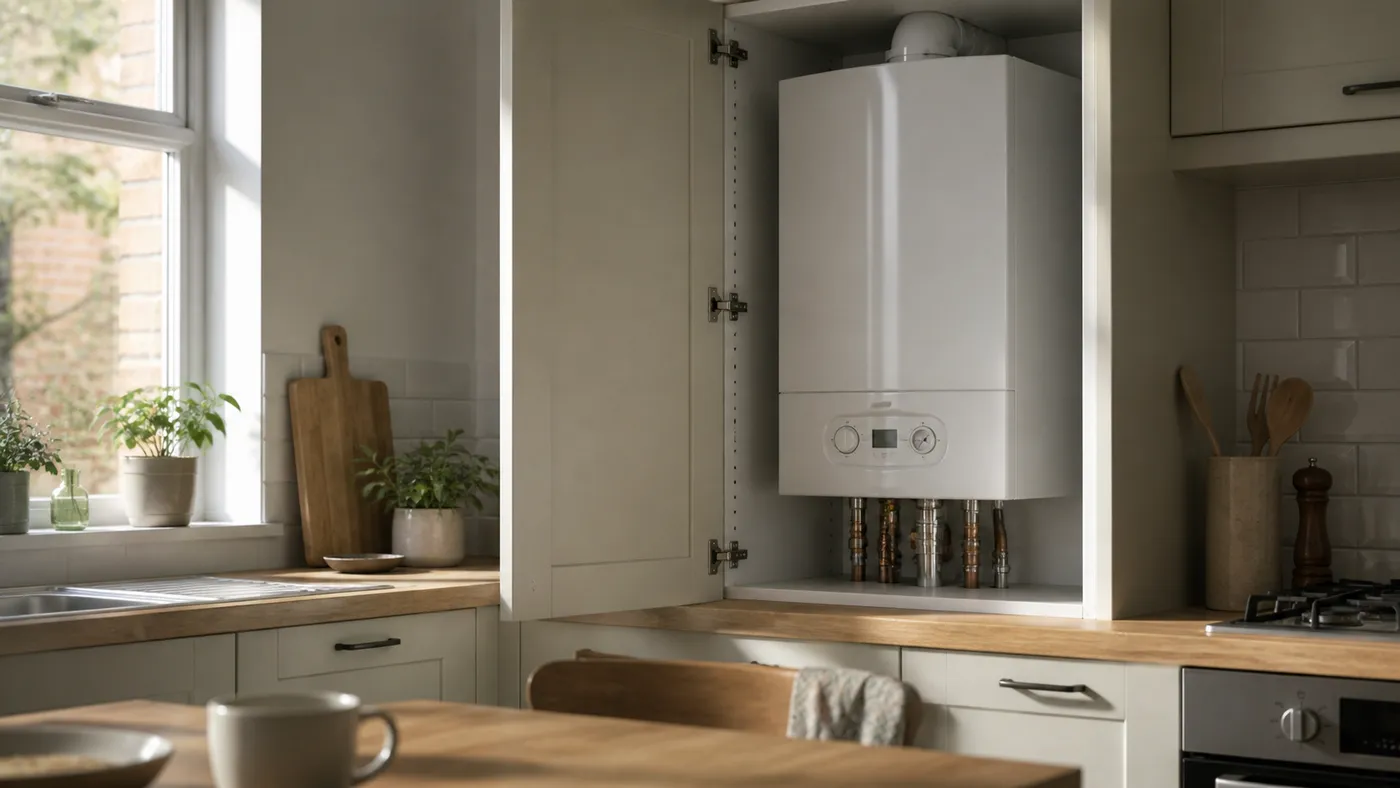
Swapping a regular boiler for a system boiler clears some of the loft and puts the heating under pressure. Whether the cold water tank goes too depends on the cylinder you choose.
Converting a regular boiler to a system boiler means the pump, expansion vessel and pressure controls move inside the boiler, the heating circuit is sealed and pressurised, and the small feed and expansion tank in the loft is removed. What happens to your hot water cylinder, and to the large cold water tank, depends on whether you keep a vented cylinder or change to an unvented one. That choice drives most of the cost and disruption.
What is the difference between a regular and a system boiler?
Both heat a stored cylinder of hot water. The difference is where the heating system's working parts live and whether the heating runs open-vented or sealed.
A regular (also called conventional or heat-only) boiler relies on parts outside the boiler: a separate pump, usually in the airing cupboard, a feed and expansion tank in the loft that tops up the heating water and takes up its expansion, and a vent pipe. A system boiler has the pump and an expansion vessel built in, and the heating circuit is filled from the mains through a filling loop and runs at a set pressure you can read on a gauge. The full three-way comparison with combis is in combi vs. system vs. regular boilers.
What actually gets removed and fitted
The old boiler, its external pump and the feed and expansion tank come out, and the heating circuit is converted to a sealed system. On a typical conversion the work includes:
- Removing the old boiler and, usually, the separate pump and its valves.
- Removing the feed and expansion tank in the loft and capping or removing its feed and vent pipes.
- Fitting a filling loop and pressure relief valve so the heating can be topped up from the mains and protected against over-pressure.
- Reviewing the motorised valves and wiring. Existing zone valves are often reused if they are in good order; worn ones are better replaced while the system is drained.
- Cleaning the system and fitting a magnetic filter before the new boiler is commissioned, the Benchmark checklist completed and the job notified under Building Regulations.
Does the cold water tank in the loft go as well?
Only if you change to an unvented cylinder. Keep a vented cylinder and the large cold water storage tank stays, because it still feeds your hot water.
This is the point most people miss. A system boiler can heat an ordinary vented cylinder perfectly well. In that case the heating side becomes sealed, but the hot taps are still fed by gravity from the loft tank, so hot water pressure stays much as it was. If you want the loft cleared completely and mains-pressure hot water, the cylinder has to change to an unvented one fed directly from the mains. The trade-offs are set out in unvented or vented: choosing a replacement cylinder.
When an unvented cylinder is and is not the right partner
An unvented cylinder only performs as well as the mains supply feeding it. With a good incoming flow rate it gives strong showers on every floor; with a weak one, it can disappoint.
Before choosing one, the mains flow rate should be measured at the property, not guessed from how the kitchen tap feels. Older London terraces on long or narrow supply pipes, and upper-floor flats, are where this most often catches people out. An unvented cylinder also has to be fitted by an engineer holding the G3 unvented qualification, needs a discharge pipe routed to a safe outlet, and is notifiable under Building Regulations. See how to check your cylinder installer is G3 qualified.
What to check in the existing system first
Pressurising an old open-vented system is the step that can expose weak points. A good survey looks for them before the price is fixed, not after the system is filled.
- Old radiator valves and joints. Fittings that never leaked at low loft-tank pressure can start weeping once the circuit runs at a higher sealed pressure.
- Gravity-fed hot water circuits. Some older homes heat the cylinder by gravity rather than with a pump. These need converting to fully pumped with a motorised valve, which is extra pipework.
- Sludge. Open-vented systems draw in air and tend to carry more sludge. A cleanse, or a power flush where the condition justifies it, protects the new boiler.
- Controls. In England, a replacement gas boiler must have working time and temperature controls, so a programmer and room thermostat that suit a system boiler are part of the job. Where a cylinder stays, a cylinder thermostat wired to the boiler is part of the same controls requirement; see do you need a cylinder thermostat with a new boiler.
When a system boiler is the wrong conversion
If your household rarely runs two hot outlets at once and the mains flow is good, a combi may give you more space back for less work. If two bathrooms are in regular use together, a system boiler is usually the better fit.
A regular boiler is also still the right choice in a few homes: where the mains supply is too weak for an unvented cylinder and you want to keep a vented cylinder anyway, the practical gain from converting can be small. In that case a like-for-like regular boiler, fitted properly with a clean system and modern controls, is an honest option. The comparison with a combi conversion is covered in changing to a combi boiler.
How long it takes and how it is priced
Swapping a regular boiler for a system boiler while keeping the vented cylinder is often a one to two day job. Changing the cylinder to unvented at the same visit usually adds time.
Because the work depends on your cylinder choice, mains flow, pipework and the state of the existing system, it is priced after a survey rather than read off a list. Our system boiler replacement survey checks each of those points and gives a fixed written quote. If a combi or a like-for-like regular boiler would serve the house better, you will be told before anything is priced. Book a free survey to find out what a conversion would involve in your home.
Frequently asked questions
Can a system boiler work with my existing hot water cylinder?
Usually, yes. A system boiler can heat an existing vented cylinder if the cylinder is in good condition and suitable. In that case the cold water tank in the loft stays, because it still supplies the hot taps.
Will converting to a system boiler improve my shower pressure?
Not on its own. Hot water pressure only improves if the cylinder is changed to an unvented one fed from the mains, and only as far as your incoming mains flow allows.
Do all the loft tanks go when I change to a system boiler?
The small feed and expansion tank goes because the heating becomes sealed. The large cold water storage tank goes only if the cylinder is replaced with an unvented one; otherwise it stays to feed the hot water.